Treat PCOS Hirsutism With Laser Therapy: A Complete Guide

Table of Contents
Understanding PCOS Hirsutism and How Laser Therapy Works
How Many Laser Sessions for PCOS Hair Removal
Laser Hair Removal for Melanated Skin With PCOS
Electrolysis vs Laser for PCOS: Which Treatment Is Right for You
Managing Expectations and Long-Term Maintenance
Safety, Side Effects, and Skin Sensitivity With PCOS
What to Do Before and After Your PCOS Laser Hair Removal Sessions
Frequently Asked Questions
Last Updated: October 1, 2026
Understanding PCOS Hirsutism and How Laser Therapy Works
PCOS hirsutism laser therapy offers a practical solution for managing unwanted hair growth caused by polycystic ovary syndrome. When PCOS triggers elevated androgen levels, your body produces excess terminal hair in areas where you'd normally see fine vellus hair. This hormonal imbalance drives the hair growth cycle, making traditional hair removal methods ineffective long-term.
Laser hair removal works by targeting melanin in the hair follicle. The laser emits concentrated light that converts to heat, damaging the follicle during its active growth phase. For PCOS patients, this approach addresses the symptom directly while you manage the underlying hormone regulation through other treatments.
The key difference with PCOS hirsutism is persistence. Standard laser hair removal treats genetic hair patterns. PCOS-related hair growth continues because hormones keep stimulating new follicles. This is why maintenance therapy matters. At PINK MINK NYC, we design treatment plans that account for this ongoing hormonal driver, using techniques tailored to your skin type and PCOS profile.
Light-based therapy works best when you understand the hair growth cycle. Your hair moves through three phases: anagen (active growth), catagen (transition), and telogen (resting). Laser targets follicles during anagen, when the hair shaft connects firmly to the follicle. PCOS patients typically need multiple sessions because not all follicles are in anagen simultaneously.
Pro Tip The real challenge with PCOS hirsutism isn't getting results from laser therapy, it's maintaining them long-term. Plan for ongoing sessions every 6-12 months after your initial clearance phase, not a permanent one-time fix.
How Many Laser Sessions for PCOS Hair Removal
Most people need 6-8 sessions spaced 4-6 weeks apart to see significant hair reduction for PCOS hirsutism laser therapy. However, PCOS patients often require more sessions than those without hormonal hair growth because new follicles keep activating due to elevated androgens.
The number of sessions depends on several factors:
Hair density and thickness, denser, coarser terminal hair responds faster
Skin phototype, your melanin levels affect how the laser targets the follicle
Hormone levels, better-controlled PCOS may respond faster
Treatment area, larger zones like legs take more sessions than smaller areas
Laser technology, advanced systems can sometimes reduce session count
PINK MINK NYC reports that many clients see dramatic results in as few as 3 sessions. This differs from typical timelines because Dr. Syed's method is specifically designed for PCOS and melanated skin, addressing both the hair follicle and the skin sensitivity that comes with hormonal conditions.
Between sessions, your hair will shed naturally as treated follicles release. You'll notice reduced regrowth density with each cycle. By session 4-5, most patients report 70-80% reduction in the treatment area.
Key Takeaway Session count for PCOS hirsutism laser therapy varies widely. Expect 6-8 sessions minimum, but discuss your specific timeline during a consultation, PCOS severity and your response to treatment will determine your actual plan.
After your initial clearance phase, maintenance becomes critical. Many PCOS patients return every 6-12 months for touch-up sessions to manage new hair growth triggered by ongoing hormonal activity. This is normal and expected, not a failure of the treatment.
Laser Hair Removal for Melanated Skin With PCOS
Melanated skin requires specialized laser protocols that standard clinics often don't offer. Your higher melanin concentration means the laser can absorb energy in the skin itself, not just the hair follicle, creating risk for burns or post-inflammatory hyperpigmentation.
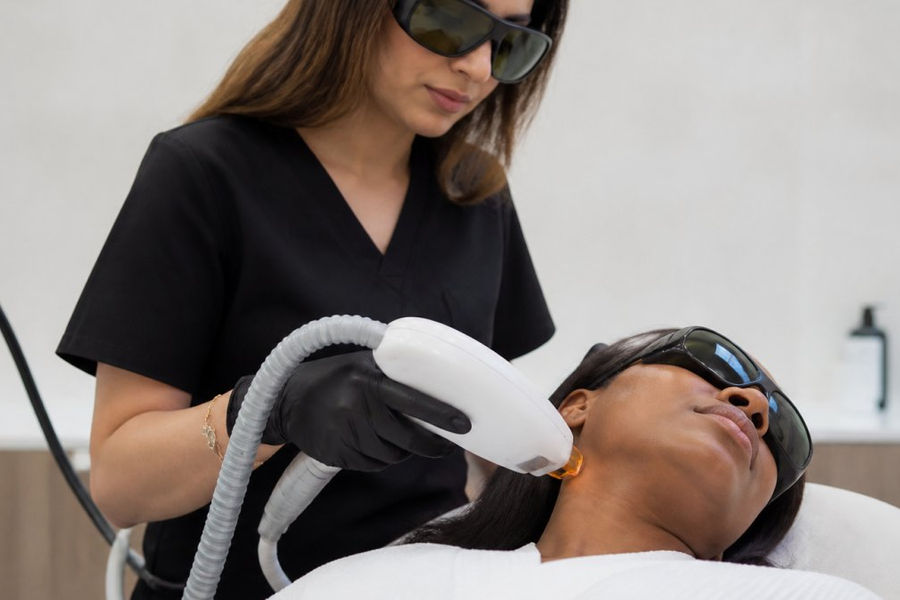
The challenge intensifies with PCOS. Hormonal acne and hyperpigmentation often accompany hirsutism in PCOS patients with darker skin tones. Your skin is already managing inflammation and melanin changes. A laser that's too aggressive can trigger more hyperpigmentation exactly when you're trying to improve your appearance.
Fitzpatrick skin types IV-VI (darker skin tones) need longer wavelengths and lower fluence settings. Nd:YAG lasers penetrate deeper without concentrating energy near the skin surface.
Common concerns for melanated skin with PCOS:
Post-inflammatory hyperpigmentation from the laser itself
Delayed healing due to PCOS-related inflammation
Folliculitis or ingrown hairs from disrupted hair cycles
Interaction between laser treatment and hormonal skin sensitivity
Electrolysis vs Laser for PCOS: Which Treatment Is Right for You
Electrolysis and laser target hair removal differently. Understanding the trade-offs helps you choose the right approach for your PCOS hirsutism.
Aspect | Laser | Electrolysis |
Speed per session | Fast (full face: 15-20 min) | Slow (full face: 60+ min) |
Best for | Large areas, dense hair | Small areas, sparse hair |
Hair color | Works on dark hair best | Works on all hair colors |
Skin tone | Requires careful settings on melanated skin | Safe for all skin tones |
Permanence | Permanent reduction (not removal) | Permanent removal |
Cost efficiency | Lower per-session cost | Higher per-session cost |
PCOS suitability | Better for widespread hormonal growth | Better for targeted touch-ups |
Managing Expectations and Long-Term Maintenance
Realistic timeline expectations:
Months 0-6: Initial clearance phase. You'll see 70-80% reduction.
Months 6-12: Maintenance phase. Touch-up sessions every 6-8 weeks address new growth.
Year 2+: Ongoing maintenance every 6-12 months as new follicles activate.
Watch Out A clinic promising permanent removal of PCOS hirsutism without ongoing maintenance is misleading you. New follicles will activate due to your hormones. Plan for maintenance sessions, not a one-time fix.
Combination therapy works best for long-term management. Continue any hormone-regulating medications your doctor prescribed (birth control, spironolactone, etc.). These reduce new hair growth by lowering androgen levels. Laser clears existing hair. Together, they minimize regrowth.
Safety, Side Effects, and Skin Sensitivity With PCOS
Laser hair removal is generally safe, but PCOS complicates the picture. Your skin is already managing hormonal inflammation, acne, and sensitivity. Adding laser treatment requires careful monitoring.
Common side effects include:
Temporary redness and swelling (24-48 hours)
Mild discomfort during treatment
Temporary darkening or lightening of skin
Ingrown hairs as treated hair sheds
Post-inflammatory hyperpigmentation on melanated skin
PCOS-specific risks exist. Your skin's inflammatory state means:
Slower healing after laser treatment
Higher risk of post-inflammatory hyperpigmentation
Potential flare-ups of hormonal acne
Increased folliculitis (infected ingrown hairs)
Essential aftercare for PCOS patients:
Strict sunscreen use (SPF 30+) for 4 weeks post-treatment
Avoid heat, exercise, and sweating for 24-48 hours
Use gentle, fragrance-free skincare
Apply prescribed serums or creams to prevent hyperpigmentation
Avoid other skin treatments (chemical peels, microdermabrasion) for 2 weeks
Monitor for signs of infection or unusual reactions
Contraindications exist. Don't pursue laser treatment if you:
Have active skin infections or open wounds
Take medications that severely increase photosensitivity
Are pregnant (generally safe but best to wait)
Have a history of keloid scarring
What to Do Before and After Your PCOS Laser Hair Removal Sessions
Preparation determines treatment success and side effect severity.
Two weeks before treatment:
Stop waxing, plucking, and electrolysis (shaving is fine)
Avoid sun exposure and tanning
Discontinue photosensitizing medications if possible (discuss with your doctor)
Avoid chemical peels and other skin treatments
Don't apply self-tanner
One week before:
Shave the treatment area (hair removal needs the follicle intact)
Avoid perfumed lotions and deodorants
Stop using retinoids or vitamin A products
Skip swimming and hot baths
Day of treatment:
Arrive with clean, dry skin (no lotions or makeup)
Wear loose, dark clothing to hide any temporary redness
Eat a light meal beforehand (some people feel faint)
Take ibuprofen 30 minutes before if you're sensitive to discomfort
Immediately after (first 24-48 hours):
Apply ice packs to reduce swelling
Use prescribed aftercare serums or creams
Wear loose clothing
Avoid hot showers, saunas, and exercise
Skip swimming and hot tubs
Don't apply makeup or fragrant products
Sleep with your head elevated to reduce swelling
First week:
Use gentle, fragrance-free skincare only
Apply sunscreen SPF 30+ daily, even indoors
Avoid sun exposure completely
Don't pick at scabs or ingrown hairs
Wear loose clothing over treated areas
Skip other skin treatments
Weeks 2-4:
Continue strict sun protection
Resume normal skincare gradually
Monitor for hyperpigmentation or unusual reactions
Use prescribed hyperpigmentation serums if needed
Schedule your next session (typically 4-6 weeks out)
The difference between okay results and excellent results often comes down to aftercare compliance. PCOS patients especially need to follow these protocols because your skin heals differently than non-PCOS skin.
Frequently Asked Questions
Is laser hair removal effective for PCOS hirsutism?
Yes, laser therapy is an effective treatment for PCOS-related hirsutism. It works by targeting melanin in the hair follicle, disrupting the hair growth cycle. Clinical efficacy studies show significant hair reduction in PCOS patients, with most experiencing 70-90% clearance after completing a full treatment course. Results depend on factors like hair density, skin phototype, and androgen levels. A dermatologist can assess whether laser is appropriate for your specific situation during a consultation.
How many laser sessions are typically needed for PCOS hair growth?
Most patients with PCOS require 6-12 sessions spaced 4-8 weeks apart, though some see substantial results in as few as 3 sessions. The exact number depends on hair thickness, density, hormonal imbalance severity, and your skin phototype. Hair grows in cycles, and laser targets only hairs in the anagen (active growth) phase, which is why multiple sessions are necessary. Your dermatologist will create a personalized treatment plan based on your hair characteristics and response to initial sessions.
What makes laser hair removal different for melanated skin?
Melanated skin requires specialized laser technology and adjusted settings to minimize risk of burns or discoloration while effectively targeting the hair follicle. Practitioners must account for higher melanin levels in the skin itself, not just the hair. Advanced laser systems with longer wavelengths and pulse durations work safely on darker Fitzpatrick skin types. Choosing a provider experienced in treating melanated skin, particularly one familiar with PCOS-related hair growth, significantly improves both safety and results.
Can laser hair removal permanently stop PCOS hair growth?
Laser therapy provides long-term hair reduction rather than permanent removal. It significantly reduces hair count and thickness, but because PCOS involves ongoing hormonal imbalance, some regrowth may occur over time. Most patients experience stable results with occasional maintenance sessions (typically 1-2 per year). Combining laser therapy with medical management of androgen levels, such as hormonal contraceptives or spironolactone, can improve long-term outcomes and reduce maintenance frequency.
BOOK NOW


Comments