Hair Grows Back After Laser: What to Do

Table of Contents
Why Hair Grows Back After Laser Treatment
Hair Growth Cycles and the Anagen Phase
The Difference Between Shedding and Regrowth
Hormonal Factors: PCOS and Laser Hair Removal
How Hormonal Fluctuations Affect Treatment Results
Medication-Induced Hair Growth After Treatment
Understanding the Laser Hair Removal Shedding Process
What Happens in the Days After Your Session
Post-Treatment Skincare Routine
Laser Hair Removal Touch-Up Frequency and Maintenance
How Often You Actually Need Touch-Ups
Professional Clinical Laser vs. Home-Use Devices
Factors That Affect How Long Results Last
Skin Type, Hair Color, and Treatment Efficacy
Managing Expectations for Permanent Hair Reduction
What to Do If You Notice Unexpected Regrowth
When to Schedule a Consultation
Troubleshooting Patchy or Sparse Regrowth
Frequently Asked Questions
Last Updated: September 18, 2026
Why Hair Grows Back After Laser Treatment
Hair grows back after laser because the treatment doesn't destroy every hair follicle in one session. Laser targets hair in the active growth phase, but your hair grows in cycles. Not all follicles are active at the same time, so multiple treatments are needed to catch each one when it's vulnerable.
Understanding this process helps you set realistic expectations. Many people expect permanent results after one or two sessions and feel disappointed when they see regrowth. The truth is more nuanced: laser hair removal delivers long-term reduction, not instant permanence.
Hair Growth Cycles and the Anagen Phase
Your hair doesn't grow continuously. It cycles through three phases: anagen (growth), catagen (transition), and telogen (shedding). Only hair in the anagen phase responds to laser treatment. During anagen, the hair follicle is actively producing the hair shaft and contains melanin, which absorbs the laser energy.
Here's what happens during treatment:
Laser targets melanin in the hair shaft
Heat travels down to the follicle
The follicle is damaged and stops producing hair
Hair sheds over the next 1-2 weeks
The problem: about 20-30% of your hair is in anagen phase at any given time. The rest are in catagen or telogen. This is why you need multiple sessions spaced 4-8 weeks apart. Each session catches a different batch of hair in the growth phase.
The Difference Between Shedding and Regrowth
This distinction matters. Shedding is normal and expected. Regrowth means new hair is forming, which suggests the follicle wasn't fully damaged.
After your laser session, the hair you see falling out isn't new growth. It's the treated hair being pushed out by your skin's natural processes. This happens over 5-14 days post-treatment. You might see what looks like stubble, but that's actually the treated hair exiting the follicle.
True regrowth is different. New hairs appear weeks or months later, growing from follicles that either weren't treated or weren't damaged enough to stop producing hair. This is when you know you need another session.
Many people mistake shedding for failure. They panic after seeing hair fall out. But shedding means the treatment worked. Regrowth is what tells you whether you need follow-up care.
Hormonal Factors: PCOS and Laser Hair Removal
Hormonal imbalances complicate laser hair removal. If your body produces excess androgens (male hormones), you'll grow hair faster and thicker than someone with balanced hormones. This is especially true for people with polycystic ovary syndrome.
PCOS affects how your body produces and processes hormones. The condition triggers excess hair growth on the face, chest, and body. Laser can help manage this hair, but hormones work against the treatment. You might need more sessions or more frequent touch-ups than someone without PCOS.
How Hormonal Fluctuations Affect Treatment Results
Hormones influence hair density, thickness, and growth rate. Higher androgen levels mean more active follicles and faster regrowth cycles. Even if laser damages a follicle, hormones can stimulate nearby follicles to become active sooner.
This doesn't mean laser won't work for you. It means results take longer and require more patience. At PINK MINK NYC, we specialize in laser hair removal for PCOS because we understand these dynamics.
Your hormonal state also fluctuates monthly. You might notice more hair growth during certain phases of your cycle. This is normal. Tracking these patterns helps your technician schedule sessions when they'll be most effective.
Medication-Induced Hair Growth After Treatment
Some medications trigger hair growth as a side effect. Steroids, anticonvulsants, and certain blood pressure medications can increase facial and body hair. If you're on any of these, mention it during your consultation.
Medication-induced hair might respond differently to laser than natural hair. The growth pattern might be unpredictable, and you might need adjusted treatment intervals. Your technician needs to know your full medical history to plan realistic outcomes.
Understanding the Laser Hair Removal Shedding Process
The first week after treatment is when most shedding happens. Your skin pushes out the damaged hair. This is the healing process, not a sign of failure.
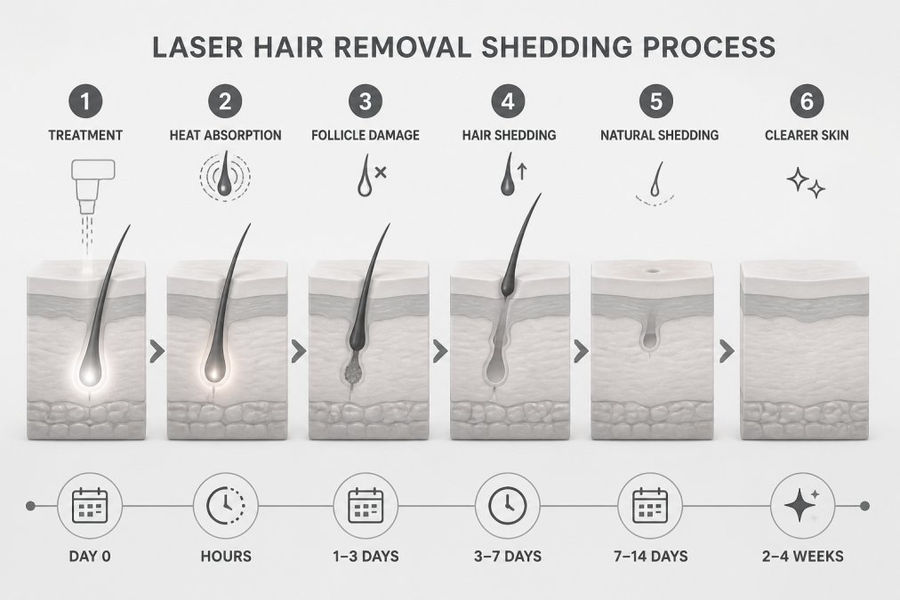
What Happens in the Days After Your Session
Day 1-2: Mild redness and warmth. Your skin is healing. Avoid hot water, tight clothing, and intense exercise.
Day 3-7: Hair begins shedding. You'll see fine hairs falling out when you shower or wash your face. This is the treated hair exiting. Gently wash the area but don't scrub or pick at the skin.
Day 8-14: Most shedding is complete. The area looks smoother. Some redness might linger, but it fades.
Week 3 onward: Watch for new growth. If hairs appear, they're either untreated follicles or follicles that weren't damaged enough.
Post-Treatment Skincare Routine
Your aftercare routine directly affects results. Proper care reduces inflammation, speeds healing, and helps your skin recover fully.
Essential post-treatment steps:
Use gentle, fragrance-free cleanser for 48 hours
Apply SPF 30+ daily for at least 2 weeks
Avoid hot baths, saunas, and chlorine pools for 48 hours
Skip exfoliants, retinoids, and vitamin C serums for 5-7 days
Don't pluck, wax, or epilate between sessions
Moisturize with gentle, non-comedogenic products
Laser Hair Removal Touch-Up Frequency and Maintenance
You won't need touch-ups forever, but you will need them for a while. How long depends on your hair type, skin type, hormones, and the laser technology used.
How Often You Actually Need Touch-Ups
Most people need 6-8 sessions spaced 4-8 weeks apart to see significant reduction. After that, maintenance sessions every 6-12 months keep regrowth minimal. Some people need touch-ups annually. Others go 18-24 months between sessions.
Pro Tip Track your own results between sessions. Take photos from the same angle and lighting. This helps you and your technician spot patterns and adjust timing. You'll notice when regrowth slows down, that's when you can extend time between sessions.
Professional Clinical Laser vs. Home-Use Devices
This distinction matters for results. Professional clinical lasers are more powerful than home-use devices. They deliver higher energy in shorter pulses, which damages follicles more effectively.
Professional lasers also have advantages:
Trained technicians adjust settings for your skin type
Larger treatment areas covered faster
Better results for dark skin tones
Safer for sensitive areas like underarms and bikini line
Factors That Affect How Long Results Last
Results vary widely. Two people with similar hair and skin might have completely different outcomes. Understanding the factors that influence longevity helps you predict your own timeline.
Skin Type, Hair Color, and Treatment Efficacy
Laser works best on dark hair and light skin. The contrast makes it easier for the laser to target melanin in the hair without damaging surrounding skin. If you have light hair or dark skin, results take longer.
Managing Expectations for Permanent Hair Reduction
"Permanent" is a tricky word in laser hair removal. The FDA defines permanent hair reduction as a long-term, stable reduction in hair count. It doesn't mean zero hair forever.
Watch Out Be cautious of providers claiming 100% permanent removal in a set number of sessions. Results are individual. Hormonal changes, medications, and genetics all influence long-term outcomes. A reputable provider gives you realistic timelines and adjusts expectations based on your response.
What to Do If You Notice Unexpected Regrowth
Regrowth happens. It's frustrating, but it's fixable. The key is identifying what's causing it and adjusting your approach.
When to Schedule a Consultation
Schedule a follow-up if:
Regrowth appears thicker or darker than before treatment
Hair returns in the same spot repeatedly after multiple sessions
You notice regrowth sooner than expected (within 2-3 weeks)
Treated areas show patchy or uneven results
You've had no reduction after 3 sessions
A consultation helps identify the problem. Maybe your follicles need more aggressive settings. Maybe hormonal changes require a different approach. Maybe you need a different laser type. A qualified technician diagnoses the issue and adjusts your plan.
Troubleshooting Patchy or Sparse Regrowth
Patchy regrowth usually means some follicles weren't in the active growth phase during treatment. This is normal. Schedule another session to catch those follicles when they're active.
If regrowth is heavy and uniform, your follicles might be resistant to the laser settings used. Your technician might need to:
Increase energy levels
Switch to a different laser wavelength
Adjust the treatment interval
Frequently Asked Questions
Is it normal for hair to grow back after laser hair removal?
Yes, some regrowth is normal. Laser targets hair in the active growth phase, but not all follicles are active during your session. Hair grows in cycles, so follicles that were dormant during treatment will eventually enter the active phase and produce new hair. This is why touch-up sessions are part of the standard treatment plan. The goal is permanent hair reduction, not necessarily complete elimination of every follicle.
How does laser hair removal for PCOS differ from standard treatment?
PCOS causes elevated androgen levels, which stimulate hair follicles to produce more terminal hair. Standard laser protocols may not address the hormonal driver behind regrowth. A dermatologist or laser specialist experienced with PCOS can customize your plan to target both the follicles and manage expectations around hormonal regrowth patterns.
What's the difference between shedding and actual regrowth after laser?
Shedding occurs in the days and weeks after treatment as damaged hair falls out naturally from the follicle. This is expected and a sign the treatment worked. Actual regrowth happens weeks or months later when new hair emerges from follicles that either weren't damaged or were in a dormant phase during your session. If you're seeing fine, sparse hairs weeks after treatment, that's likely new growth, not shedding. New growth typically appears thinner and lighter than your original hair.
How often should I schedule laser hair removal touch-up sessions?
Touch-up frequency depends on your hair growth cycle and hormonal factors. Most people need sessions every 4-8 weeks initially, then every 6-12 weeks as regrowth becomes sparser. With PCOS or other hormonal conditions, you may need more frequent touch-ups. A qualified laser technician will assess your regrowth pattern during consultations and recommend a maintenance schedule tailored to your results. Consistency is key to achieving and maintaining permanent hair reduction.
BOOK NOW


Comments