Chemical Peel Safety for Dark Skin Tones: A 2026 Guide

Updated: Sep 16
Table of Contents
Why Chemical Peel Safety for Dark Skin Tones Is Different
Chemical Peel Hyperpigmentation Risk: What the Fitzpatrick Scale Tells Us
Best Chemical Peels for Melasma on Dark Skin: Superficial vs. Deep
Step 1: Preparing Your Skin with a Pre-Peel Melanin-Inhibiting Regimen
Chemical Peel Aftercare for Melanated Skin: Managing Rebound Hyperpigmentation
Who Should Skip Chemical Peels? Risks and Red Flags
Conclusion: Your Safety Checklist Before Booking a Peel
Frequently Asked Questions
Last Updated: September 6, 2026
Chemical peel safety for dark skin tones hinges on one dominant factor: the risk of post-inflammatory hyperpigmentation (PIH). Because darker skin contains more melanin, it responds to injury, including controlled chemical exfoliation, by overproducing pigment, leading to dark spots that outlast the peel's benefits. With the right preparation, correct peel depth, and strict aftercare, chemical peels can be safe and effective on melanated skin.
Most complications in darker skin tones stem not from the peel itself but from inadequate skin preparation and improper post-peel management. Below, we break down how to approach peels on dark skin, covering the Fitzpatrick scale, which acids are safest, and how to manage recovery to avoid rebound hyperpigmentation.
Why Chemical Peel Safety for Dark Skin Tones Is Different
Chemical peel safety for dark skin tones is different because the skin's inflammatory response is directly tied to melanin production. When a peel disrupts the skin barrier, it triggers an inflammatory cascade: in lighter skin this may result in temporary redness, but in darker skin that same inflammation often triggers melanocytes to produce excess pigment, leading to PIH. A peel that is routine for one person can be high-risk for another.
This difference is biological, not cosmetic. Melanin in darker skin is more dispersed throughout the epidermis, making it more reactive to trauma. The depth of the peel, acid concentration, and timing of the next session must all be calibrated to the individual's skin type and healing response.
Chemical Peel Hyperpigmentation Risk: What the Fitzpatrick Scale Tells Us
The Fitzpatrick scale classifies how skin reacts to sun exposure and how much melanin it contains, ranging from Type I (always burns, never tans) to Type VI (deeply pigmented, rarely burns). Chemical peel hyperpigmentation risk climbs significantly with each step up the scale, particularly for types IV, V, and VI, though each type has a distinct inflammation threshold a practitioner must respect.
For Fitzpatrick Type IV (light brown, olive, or Mediterranean skin that tans easily and rarely burns), the epidermis contains a moderate amount of melanin. The primary risk is PIH from superficial peels that are too concentrated or left on too long. A common pattern is that Type IV skin can tolerate a 20% glycolic acid peel but will react with blotchy hyperpigmentation to a 30% concentration if the skin has not been preconditioned (PubMed). For these patients, the margin for error is measured in percentage points of acid concentration.
Fitzpatrick Type V (brown skin that tans very easily and almost never burns) presents a higher baseline risk. The melanocytes are more active and more numerous, meaning the inflammatory cascade triggered by a peel is more likely to result in excess pigment. In this group, the choice of acid matters more than the concentration (peer-reviewed research). A practitioner might safely use mandelic acid at 40% on Type V skin, but the same patient could develop PIH from a 15% glycolic acid peel because the smaller molecule penetrates faster and triggers a deeper inflammatory response. The key is not just the depth of the peel but the speed of penetration.
Fitzpatrick Type VI (deeply pigmented brown to black skin that never burns) carries the highest risk. The melanin is dispersed throughout all layers of the epidermis, making the skin exquisitely sensitive to any trauma. For Type VI skin, even a superficial peel can trigger a pigment surge if the skin barrier is compromised or if the patient has been exposed to UV light in the weeks prior. The standard of care for Type VI is to use the gentlest acids available, typically lactic acid or mandelic acid at low concentrations, and to space treatments at least four to six weeks apart to allow the skin's pigment production to fully stabilize between sessions (the American Academy of Dermatology).
A critical distinction most general guides miss is the difference between epidermal melanin and dermal melanin. In Types IV through VI, melanin can also be found in the dermis, particularly in patients with a history of sun exposure or hormonal pigmentation. When a peel penetrates into the papillary dermis, it can disrupt dermal melanin, causing hyperpigmentation that is far more difficult to treat because topical lightening agents cannot easily reach that depth. This is why deep peels are categorically contraindicated for Types V and VI.
Watch Out A patient's Fitzpatrick type is a starting point, not a guarantee. Two patients with the same Fitzpatrick type can respond differently to the same acid based on their history of sun exposure, current use of retinoids, and baseline skin barrier health. Always insist on a patch test performed at least one week before the full treatment.
For practitioners, the clinical protocol for darker skin types should include a Wood's lamp examination prior to any peel. This ultraviolet light assessment determines whether pigmentation is epidermal (superficial, more responsive to peels) or dermal (deeper, less responsive and higher risk). If it reveals predominantly dermal pigmentation, the practitioner should reconsider whether a chemical peel is the right modality at all. This diagnostic rigor separates a safe peel on dark skin from a gamble.
The Fitzpatrick scale is not a simple color chart; it is a risk stratification tool. The safest approach for Types IV through VI is to assume the skin will overreact to any acid and build the protocol from the most conservative starting point: begin with the lowest effective concentration, observe the healing response for a full cycle (four to six weeks), and only then titrate upward if there are no signs of pigmentary rebound.
Best Chemical Peels for Melasma on Dark Skin: Superficial vs. Deep
When selecting the best chemical peels for melasma on dark skin, the rule is simple: superficial peels are safer, while deep peels are generally off the table. A superficial peel only penetrates the epidermis, exfoliating and resurfacing without reaching the deeper dermis where scarring and severe pigmentation originate. But not all superficial peels are equal, molecular weight, lipophilicity, and pKa determine penetration depth and inflammatory stimulus.
Glycolic acid is the smallest AHA (76 daltons), allowing rapid, deep penetration, effective for resurfacing but higher risk for PIH on darker skin. For Types IV through VI, use it only at concentrations of 20% or lower with strictly controlled neutralization time. A common practice is to apply it for two to three minutes and neutralize with sodium bicarbonate before any erythema develops, as erythema is the earliest visible sign of inflammation and the precursor to PIH.
Salicylic acid is an oil-soluble BHA (138 daltons) that penetrates through sebum into pores. Larger than glycolic acid, it penetrates more slowly and is generally better tolerated on darker skin. It is particularly valuable for acne and PIH from breakouts, clearing the pore while providing a mild anti-inflammatory effect. However, it can cause burning, and the practitioner must monitor for frosting (a white, icy appearance) indicating the acid has penetrated too deeply.
Lactic acid is an AHA (90 daltons) that is larger than glycolic acid due to an additional hydroxyl group, meaning it penetrates more slowly and is inherently more hydrating, excellent for darker skin that is dry or compromised. It also acts as a humectant, supporting barrier repair during the post-peel period. For melasma on dark skin, lactic acid at 30% to 40% is often the first-line peel, providing visible exfoliation with a lower inflammatory profile.
Mandelic acid is the largest AHA commonly used in peels (152 daltons), penetrating very slowly and superficially, making it the gentlest option for Types V and VI. It also has inherent antibacterial properties, useful for acne-prone dark skin. The trade-off is that it requires more sessions, typically six to eight peels spaced two to three weeks apart, but the reduced PIH risk justifies the longer course.
Pro Tip A practical rule for practitioners: if the patient's skin shows any sign of active inflammation, active acne, or a compromised barrier, postpone the peel. Peeling over active inflammation in dark skin is the fastest route to severe PIH. The skin must be calm before any acid is applied.
Deep peels, often using trichloroacetic acid (TCA) above 30%, penetrate into the papillary or reticular dermis. On dark skin, they carry a high risk of severe hyperpigmentation, hypopigmentation, or scarring. TCA at high concentrations causes protein denaturation and coagulative necrosis, triggering a robust inflammatory response that stimulates melanocytes to produce melanin at a rate overwhelming natural desquamation, leading to hyperpigmentation that can persist for months or years. If the peel damages melanocytes themselves, the result can be permanent hypopigmentation that is extremely difficult to treat.
Melasma is a chronic, relapsing condition driven by hormonal and UV triggers. A single deep peel does not cure it; it temporarily removes superficial pigment while leaving underlying melanocyte hyperactivity untouched. Within weeks, the melasma typically returns, often worse because the peel's inflammatory stimulus has further sensitized the melanocytes. This is why the standard of care for melasma on dark skin is a series of superficial peels combined with a strict maintenance regimen, not a single aggressive treatment.
A more nuanced approach for stubborn melasma is the combination peel: a superficial glycolic acid peel followed immediately by a low-concentration TCA peel (10% to 15%) applied only to hyperpigmented areas. This technique, sometimes called a modified Jessner's peel, targets melasma without treating the entire face with a deep acid. However, it requires significant experience and should only be performed by a practitioner who has treated hundreds of dark skin patients, as the risk of uneven results or PIH is real.
Key Takeaway The safest chemical peel protocol for dark skin is a conservative one: a superficial acid chosen for its molecular weight and penetration profile, a thorough pre-peel melanin-inhibiting phase, and strict sun avoidance during recovery. Any practitioner who skips these steps is not prioritizing your long-term skin health. If a practitioner recommends a deep TCA peel for your melasma, seek a second opinion from a dermatologist who specializes in treating [melanated skin](/post/fade-acne-scars-on-melanated-skin-a-complete-guide). Step 1: Preparing Your Skin with a Pre-Peel Melanin-Inhibiting Regimen The success of a chemical peel on dark skin is largely determined in the weeks before the procedure. A pre-peel regimen stabilizes melanin production and strengthens the skin barrier so the peel does not trigger a defensive pigment response. This step is often missed by generalists, but it is the most critical part of chemical peel safety for melanated skin. Starting two to four weeks before your peel, introduce a melanin-inhibiting agent. Hydroquinone is the most well-known tyrosinase inhibitor but requires a prescription and careful monitoring. Non-prescription alternatives include azelaic acid, kojic acid, and alpha-arbutin, all of which reduce the activity of tyrosinase, the enzyme responsible for melanin production. Alongside these inhibitors, daily sun protection with broad-spectrum SPF is non-negotiable, as sun exposure before a peel sensitizes the skin and increases the risk of a reactive pigment surge. Your practitioner may also recommend a gentle moisturizer to ensure the skin barrier is healthy and hydrated, since a compromised barrier will absorb acid unevenly and increase the risk of burns or blotchy results. :::warning Skipping the pre-peel melanin-inhibiting phase is the single most common cause of post-peel hyperpigmentation in darker skin. Without tyrosinase inhibitors on board, the skin is primed to overproduce pigment the moment it senses inflammation from the peel.
Chemical Peel Aftercare for Melanated Skin: Managing Rebound Hyperpigmentation
The days following a chemical peel are just as important as the preparation. For melanated skin, aftercare requires a proactive approach to manage inflammation and prevent rebound hyperpigmentation, where the skin produces excess pigment as it heals. The immediate post-peel period is not the time to stop your pigment inhibitors; continuing them is essential.
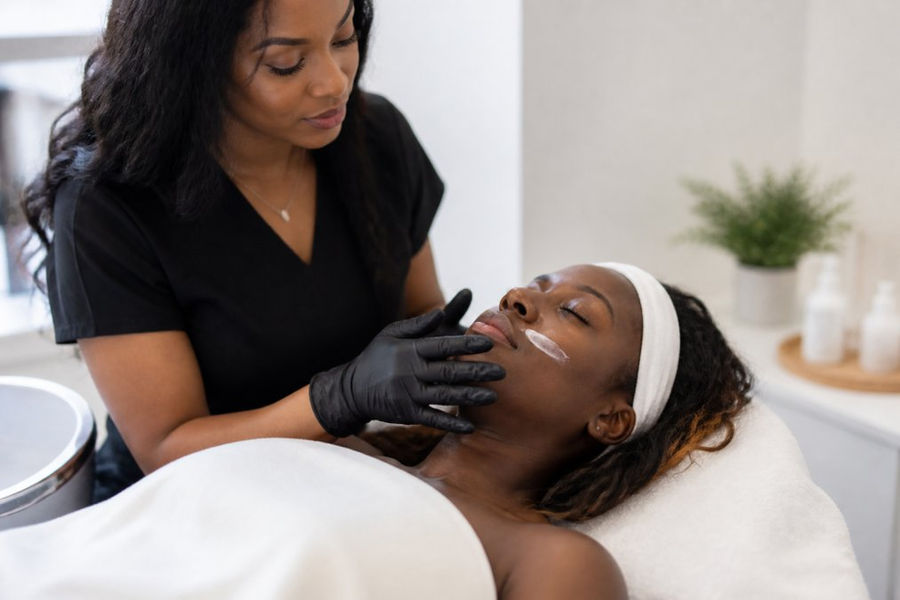
During the first 24 to 48 hours, avoid active ingredients like retinoids or strong acids and focus solely on gentle cleansing and moisturizing to support the skin barrier. Once the initial peeling subsides, typically three to five days, you can reintroduce your melanin-inhibiting products to keep pigment production in check.
Sun protection is the most critical component of aftercare. New skin emerging after a peel is highly vulnerable to UV damage. A physical sunscreen with zinc oxide or titanium dioxide is often recommended because it reflects UV rays without causing additional irritation. Strictly avoiding direct sun exposure for at least two weeks post-peel will significantly reduce the risk of rebound hyperpigmentation.
Who Should Skip Chemical Peels? Risks and Red Flags
Not everyone is a candidate for a chemical peel, regardless of skin tone. If you have active acne breakouts, particularly cystic acne, a peel can spread bacteria and exacerbate inflammation. Similarly, if you have a history of keloid scarring or poor wound healing, the risk of permanent textural damage outweighs the benefits.
Other red flags include taking photosensitizing medications, being pregnant or nursing, or having an active skin infection. A patch test is a mandatory first step for anyone with darker skin: apply the acid to a small area, usually behind the ear, and monitor the reaction for several days before proceeding with a full-face treatment.
Key Takeaway The safest chemical peel protocol for dark skin is a conservative one: a superficial acid, a thorough pre-peel melanin-inhibiting phase, and strict sun avoidance during recovery. Any practitioner who skips these steps is not prioritizing your long-term skin health.
Conclusion: Your Safety Checklist Before Booking a Peel
Before booking any chemical peel, run through this checklist. First, confirm the practitioner has specific experience treating Fitzpatrick skin types IV through VI, not just general dermatology experience. Second, ask which acid and concentration they plan to use, and ensure it is a superficial peel. Third, verify they have prescribed a pre-peel regimen to manage melanin activity. Finally, ensure you have a clear aftercare plan that includes a minimum of two weeks of strict sun protection.
The right peel can improve skin texture, fade dark spots, and boost collagen production, but the wrong approach can create a problem that takes years to resolve. For those with hormonal skin concerns, such as PCOS-related hyperpigmentation, or those who simply want expert guidance on melanated skin, the team at PINK MINK NYC, led by Dr. Syed, designs treatments around your individual Fitzpatrick skin type. We combine advanced skincare expertise with a focus on melanated skin to help you achieve a clearer, more even complexion safely. Book a consultation to discuss whether a chemical peel is the right step for your skin.
Frequently Asked Questions
Can chemical peels cause hyperpigmentation in dark skin?
Yes, chemical peel hyperpigmentation risk is real for darker skin tones. When a peel penetrates deeper than intended or triggers inflammation, the skin's melanocytes can overproduce pigment, leading to post-inflammatory hyperpigmentation (PIH). This is why choosing a superficial peel and working with a professional experienced in melanated skin is critical. A proper pre-peel regimen and strict sun protection help reduce this risk significantly.
Which chemical peels are considered safest for melanated skin?
Superficial peels using glycolic acid, salicylic acid, or lactic acid are generally considered the safest options for darker skin tones because they only affect the epidermis. These are often the best chemical peels for melasma on dark skin when used in a series. Deeper peels like those with trichloroacetic acid (TCA) carry a much higher risk of hyperpigmentation and should only be performed by a dermatologist after a thorough skin assessment.
How should I prepare my skin for a chemical peel if I have a darker complexion?
Preparation starts weeks in advance. A dermatologist or aesthetician should first classify your skin on the Fitzpatrick scale. You will likely need to use a melanin-inhibiting regimen, which may include ingredients like hydroquinone or kojic acid, to stabilize pigment production. This pre-peel phase, combined with consistent use of broad-spectrum SPF, helps ensure the peel results in an even tone rather than a rebound of dark spots.
What does the Fitzpatrick scale have to do with chemical peel safety?
The Fitzpatrick skin scale classifies skin based on its reaction to sun exposure, from type I (very light) to type VI (deeply pigmented). This scale is a primary factor in determining chemical peel safety for dark skin tones. Types IV through VI have more active melanocytes, making them more prone to hyperpigmentation after a peel. A qualified professional uses this classification to choose the right acid, strength, and treatment interval for your specific skin type.
Getting a chemical peel right on dark skin is about preparation, precision, and patience. It is not a one-off treatment but a carefully managed process. At PINK MINK NYC, we pair medical-grade microneedling and facials with personalized aftercare to support your skin at every stage. Get started with PINK MINK NYC and book a consultation to build a peel protocol designed for your skin's unique needs.
BOOK NOW


Comments